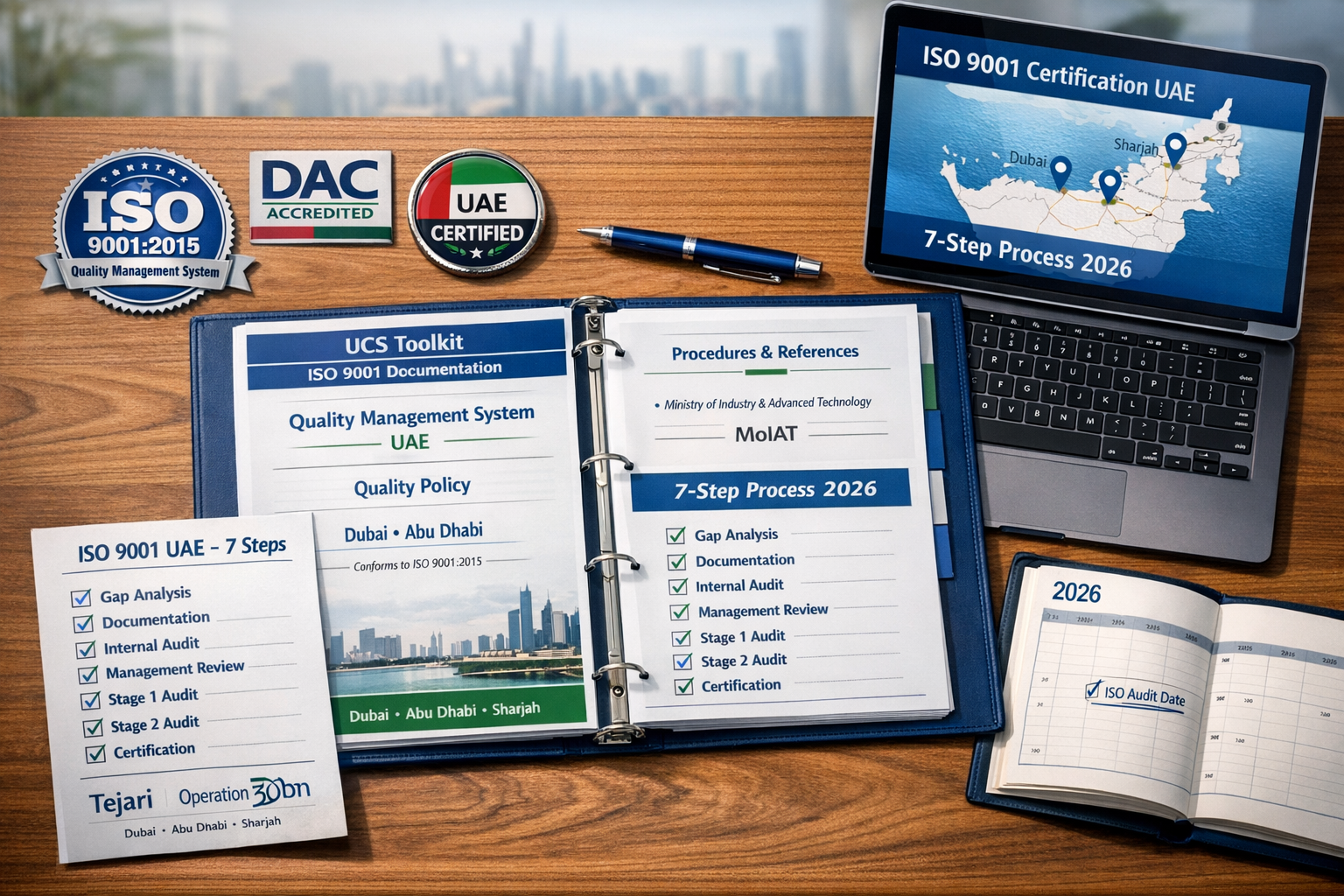
ISO Consultants for UAE Businesses: A Practical Guide
Wiki Article
ISO Certification Of Abu Dhabi: A Practical Guide For Local Businesses
The business climate in Abu Dhabi has special pressures that are unique to ISO certification. Its structure is heavily influenced because of the number of government agencies, large industry players, as well as strict rules for tendering. For local companies who have to navigate their first ISO certificate, knowing how to apply the principles of Abu Dhabi makes the process much easy and daunting.Government and Semi-Government tenders set the pace
The majority of Abu Dhabi's economy is run by governments and large industrial players, many which have formalized ISO certification as an essential prequalification requirement for suppliers and contractors. This means the option to be certified is often influenced less by internal ambition, but more by the reality of which contracts a company wishes to keep in the running for certification.
In the Energy and Industrial sectors, there are Specific expectations
Abu Dhabi's energy and industry industries have particular expectations concerning environmental and safety, given the scale and risk profile of operations in these sectors. Companies that supply into this industry in indirect ways, too, usually observe that the certification requirements of their clients directly are significantly higher than the basic norms, indicating the particular policy on risk-management.
Finding a Standard that matches Your Actual Operation
A common mistake that people make is to try to obtain a certification just because there is a competitor that has it without first mapping out which certification really matches the company's risk profile and the expectations of clients. Logistics firms' priorities are completely different from a facility management company, and starting with a clear-eyed evaluation of what the clients and tenders actually require saves considerable time later.
The Gap Assessment Stage is Important to Consider
Before formally starting implementation it is essential to conduct a gap-analysis in relation to the relevant standard will show how well the current practice conforms to the standards and where actual work is required. By skipping or rushing this phase, it could result in a long time, more expensive implementation later on, because gaps that might have been discovered earlier may be discovered unexpectedly during an audit of the audit.
Documentation Requirements Can Be Managed Better Than They Appear
Many people who are first time applicants think that ISO the requirements for documentation will be difficult to meet, but modern management system specifications are smaller in scope than the older ones were, focusing on proving procedures are actually followed instead of just being documented. A pragmatic approach for documentation, built around what the business would want to track and what they want to track, can result in an organization that is actually used rather than one that's only for auditing purposes.
Local Support Options Have Expanded By a significant amount
Abu Dhabi now has a significantly larger pool of certification bodies and consultants that are local experts that it had just five years ago, which has reduced dependence in international firms with no local context. The growth of the local sector has helped make the process more efficient as well as more adaptable to particular needs of working in the region.
Maintaining certification requires continuous commitment.
The certification process isn't just a one-time event but an ongoing commitment involving regular surveillance audits, typically annually, which ensures that the management system is maintained. Firms who treat the initial certificate as the end of the line rather than the starting point usually struggle to pass the subsequent audits. Those who incorporate the requirements of the standard into daily practices experience much less difficulty recertification.
Free Zone Businesses Face Some Specific Considerations
Businesses operating from the different free zones in Abu Dhahran often assume that certification requirements differ when compared to local businesses, but the fundamental international standards remain identical regardless of jurisdiction. What differs is specific client and tender requirements in each tenant community, which is worth discussing with free zone officials or potential customers rather than thinking that a blanket answer applies everywhere.
Realistic Budgeting for the Full Process
First-time applicants sometimes budget only for the external audit expense however they neglect internal time investment as well as the possibility of consultancy fees, and operational adjustments required to address any gaps found during assessment. A budget that is realistic will cover the full journey from initial assessment through to certificate and issuance, not just the final invoice of audit to avoid an unpleasant surprise later on in the process.
Timing of Certifications Around Business Cycles
Businesses with clear seasonal peaks such as those in the construction or events-related sectors, often have a better time scheduling the more intense testing and implementation phases during times of less activity, rather than having to plan the certification process in conjunction with peak operational demands. The Abu Dhabi-based certification bodies are generally flexible when it comes to schedules, and adjusting timing preferences earlier in the process is likely to make the process more enjoyable for all those involved.
Leaning from Businesses that Have Successfully Thrived Through It
Directly speaking with other Abu Dhabi businesses in a similar field that have had certification can provide useful information that none of the consultants or certification bodies will divulge unprompted, from realistic timelines to which aspects of the audit tend to catch applicants on from their guard. This type of insight from other businesses is highly valuable and well worth looking into before committing to a specific company or timeframe.
Working With Government Liaison Requirements
Businesses that seek certification specifically to be able to bid on government contracts at Abu Dhabi should confirm exactly what certification scope and standard version that a particular tender requires because requirements can refer to specific editions or requirements that go beyond the base international standard. A direct confirmation with the authority responsible for tendering prior to starting the process of certification eliminates the risk of signing certification against the wrong scope.
As for Abu Dhabi businesses approaching certification for the first time, the success usually depends on choosing the appropriate level of certification for operational reality, while taking the stage of preparation seriously and consider certification as an ongoing operating discipline, not just an obligation to complete once and forget about. Abu Dhabi businesses that approach certification with this level of preparation, instead of using it as a last-minute solicitation to rush through, always end up having a stronger and more actual-looking management system by the end of the process. All of this should be navigated alone, since Abu Dhabi's increasing number of knowledgeable local consultants and accreditation bodies guarantees that knowledgeable support is more easily available than at any time before. Utilizing that expanding local expertise base makes the entire process significantly more manageable than previously was. Have a look at the recommended ISO 14001 Certification for more examples.

ISO 9001 Explained: Quality Management for UAE Businesses
ISO 9001 remains the most well-known management standard throughout the world and for good reason: It's built on a practical idea, that consistent quality comes from consistent, effectively managed processes instead of good intentions alone. For UAE companies looking to become certified, understanding what the standard actually asks for will help clear up an approach that is often more complex than it actually is.What ISO 9001 Is Actually Built Around
It is at the core of it all. ISO 9001 asks a business to establish its most important processes understanding how they interact and how they interact, evaluate whether they're functioning, and then improve them continuously over time. Instead of prescribing the exact way a business should operate and run its operations, ISO 9001 provides a framework for ensuring that whatever strategy an organization adopts is consistent, documented when it is necessary, and strictly adhered to.
Why UAE Businesses Are Interested in It?
Beyond its reputational value certification, a lot of UAE companies seek ISO 9001 because government and tenders from the private sector increasingly mention it as an eligibility requirement for prequalification. Beyond the fact that it is a requirement companies that use ISO 9001 in the right manner can enjoy real operating benefits, including less repetitions of mistakes, greater accountability and a more disciplined approach to handling customer complaints.
The Role of Top Management
One area that the standard stands very clear about is genuine commitment from the top, and not quality management being handed over entirely to an individual compliance officer, who is isolated from the actual decisions. Auditors particularly look for evidence that senior management is aware of and actively supports the quality management system, rather than just approving on it.
A Risk-Based Approach is Essential to the Modern Standard
The current edition of ISO 9001 places considerable emphasis on identifying potential risks and opportunities that are relevant to the specific business setting, rather than using general guidelines, regardless of circumstances. This means a UAE construction company and a UAE software company, though each one is certified according to the exact standard they will come up with distinct quality management systems that reflect their distinct risk profile.
Customer Focus Runs Throughout the Standard
ISO 9001 repeatedly returns to the idea that quality means meeting customer demands along with expectations. Quality isn't merely internal efficiency indicators. Businesses who comply with the standard expected to use genuine methods that can help customers understand what they need and measuring whether they're satisfied. They should not assume that internal quality controls alone provide the entire picture.
The Certification Process Itself
After implementing the necessary processes and documents, certification involves an external inspection that occurs in two steps, starting with reviewing documentation and readiness, then verifying that the system is actually operating as it is described. This is followed by yearly inspections of surveillance and a thorough reconcertification audit around each three years to validate continued conformity.
Common Misconceptions Worth Clearing Up
It is widely believed that ISO 9001 requires enormous volumes of paperwork, when the most recent version has cut down on the mandatory documentation considerably when compared with earlier versions, and is focused in demonstrating true process control. Another misconception is that certification guarantees authenticity of the product. But actually, it is a proof that a business has a consistent management system to manage quality, that's a significantly different yet still an important thing.
How Differently It is Applied Across Sectors
A construction company implementing ISO 9001 will focus heavily on the handover process and subcontractor management. However, a professional services business could focus in more client engagement procedures or knowledge-management. The standards' real flexibility across sectors is its reason for being relevant across a range of UAE industries such as manufacturing, retail and consulting.
The importance of continuous improvement
ISO 9001 doesn't treat quality as a fixed destination but as a continual cycle of evaluating performances, identifying opportunities for improve, and implementing changes gradually. Companies that truly embrace the continuous improvement approach, instead of focusing on certification as a single-time event, generally see more long-term, meaningful operational benefits of the standard.
You can prepare your team in the Cultural Shift
One of the areas that is often overlooked for ISO 9001 implementation is the genuine cultural shift required, making the shift from informal, independent methods of working to more organized, consistent procedures that don't depend on a single person's memory or judgment. The preparation of staff members for this shift and educating them on the real benefits instead of just presenting it solely as an exercise in compliance makes a huge difference in how smoothly it is implemented.
Why is it that the Investment tends to be a Success?
Companies that have implemented ISO 9001 thoughtfully, rather then merely using it as a paperwork exercise to satisfy any external requirement, typically realize the value of their investment by fewer repeat errors, greater internal accountability and an incredibly solid foundation to scale operations as the company expands, with benefits that extend well beyond the certificate it self.
How ISO 9001 Interacts With Customer Representations Specifically
The Norm requires that businesses establish a solid, well-organized process for handling customer complaints and feedback, considering each complaint as a valuable data point that must be fed back into improved processes instead of being ignored or resolved. UAE firms that develop this feedback loop effectively often experience it becoming one of the most practically useful parts of the management system that goes far beyond its primary function in ensuring the audit.
For UAE firms who are trying to decide if ISO 9001 is worth pursuing an honest assessment usually boils down to if the company truly wants efficient, consistent processes. since the certification itself an official recognition of that underlying operational discipline. For UAE businesses that are truly dedicated to improving their practices, rather than simply collecting a certificate, ISO 9001 offers a globally recognized and tested system to ensure that the improvement is permanent rather than just a random. Nothing in this framework requires the abandonment of what is already in place inside a company. ISO 9001 is fundamentally about developing and enhancing good practice rather than replacing it wholesale by something totally different. In this way, the it becomes a natural extension of good management rather than as a burden that is externally placed on the company. It is, in the end it is a system built around good sense that is used consistently rather than anything mysterious. This is, more than anything else, is the reason it deserves careful consideration. Few investments provide this enormous, lasting value. Incredibly worth the effort it takes to get right. Follow the recommended ISO 27001 Certification for blog recommendations.